Home  /  Bathroom Remodeling  /  Before You Remodel: Shower Tile
Before You Remodel — Guide No. 2

What Goes Behind Shower Tile

Tile and grout shed most of the water in a shower. Not all of it. Grout is porous, and a little water gets through every time the shower runs. What decides whether a shower lasts is the layer behind the tile, and you never see that layer again once the tile is up. Here it is, photographed in a shower we rebuilt, with five things to ask before anyone tiles yours.

By the LTJ Remodeling crew5 min readPhotos from our own job
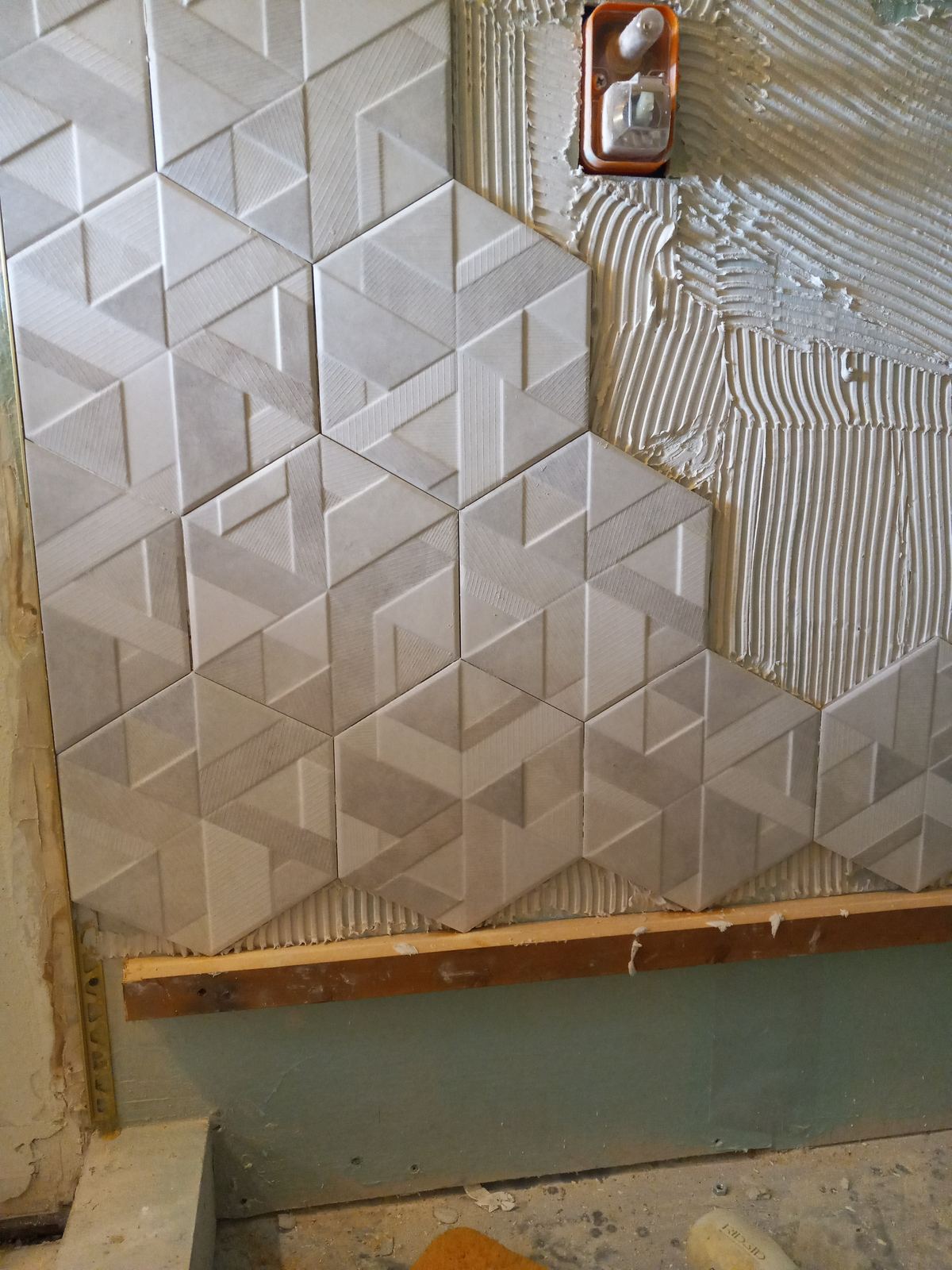
Hexagon shower tile being set in thinset over a green waterproofing membrane, with a wood ledger board under the first row
Behind the tile — a shower we rebuilt in 2022

What goes behind shower tile?

Two things: a backer board made for wet areas, and a waterproofing layer. The board gives the tile something solid that does not fall apart when it gets wet. The waterproofing, a membrane that is rolled on, troweled on or applied in sheets, is what actually stops the water. Tile and grout are the finish. They are not the barrier.

Ordinary drywall does not belong behind shower tile, and neither does the green “moisture-resistant” kind. Both are gypsum wrapped in paper. In a shower they soften, and the tile lets go.

What is behind the tile, while you can still see it

Every photo is from the same job, June and July 2022. No stock photos.

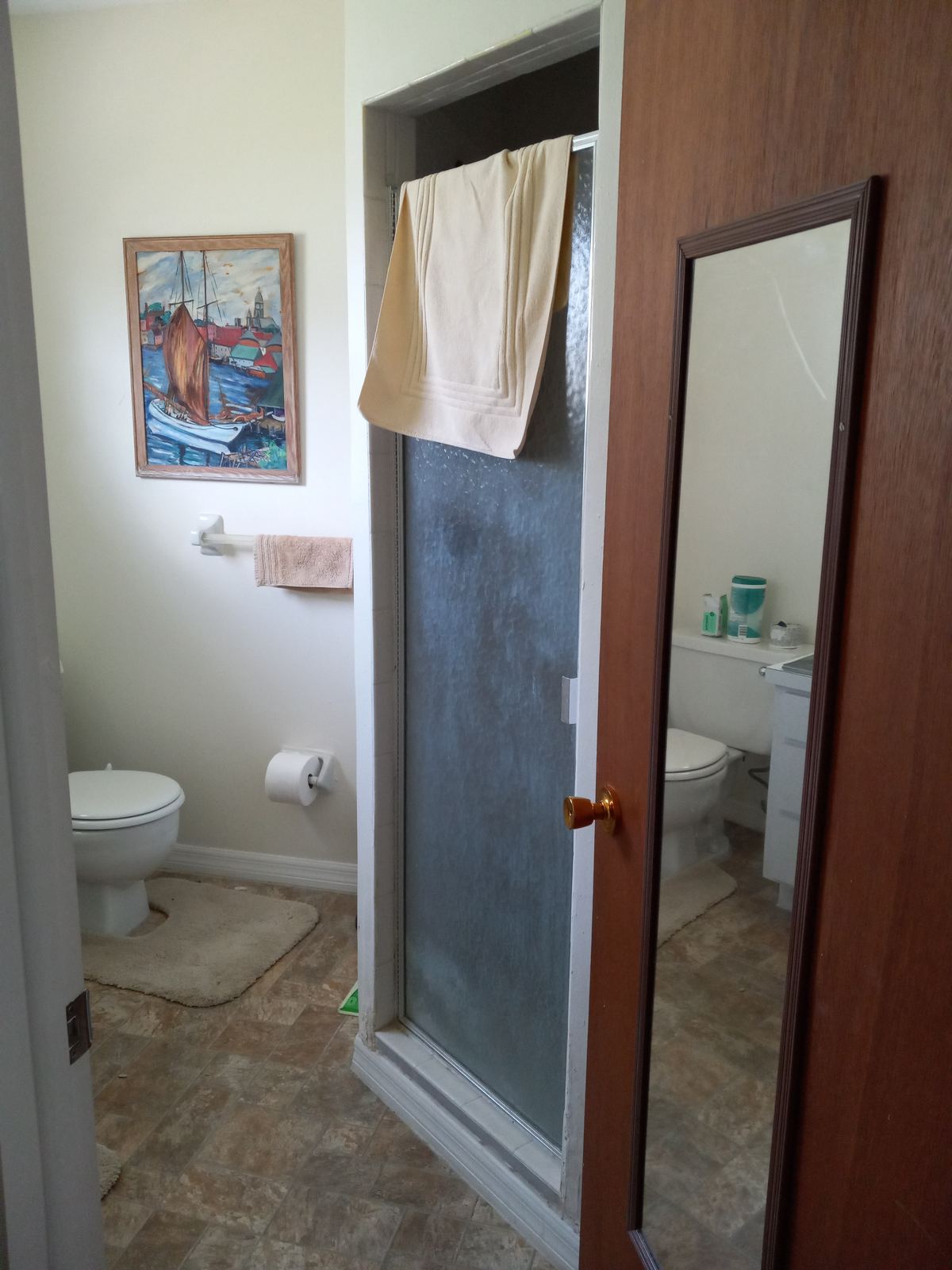
Bathroom before the remodel with an old walk-in shower behind a framed pebbled-glass door
01June 2022

The shower we started with

A walk-in shower behind a framed, pebbled-glass door. This photo is from before we touched anything.

From here you can tell how old a shower is. You cannot tell what is behind the tile. Nobody can, until the tile comes off.

Shower wall during tiling: hexagon tile set in combed thinset over a green waterproofing layer, resting on a temporary wood ledger board
02July 2022

The part you never see again

The same shower, part way through tiling. This is the photo that matters, because everything in it disappears for good a few hours later.

The green is the waterproofing. It is a membrane rolled over the backer board, across the seams and the screw heads, and down over the curb in one continuous coat. That layer, not the tile, is what keeps water out of the wall.

The ridged white material is thinset, combed with a notched trowel so every tile beds fully instead of sitting on a few dabs. The wood strip is a ledger board: it holds the first row dead level, and it comes off once the tile has set.
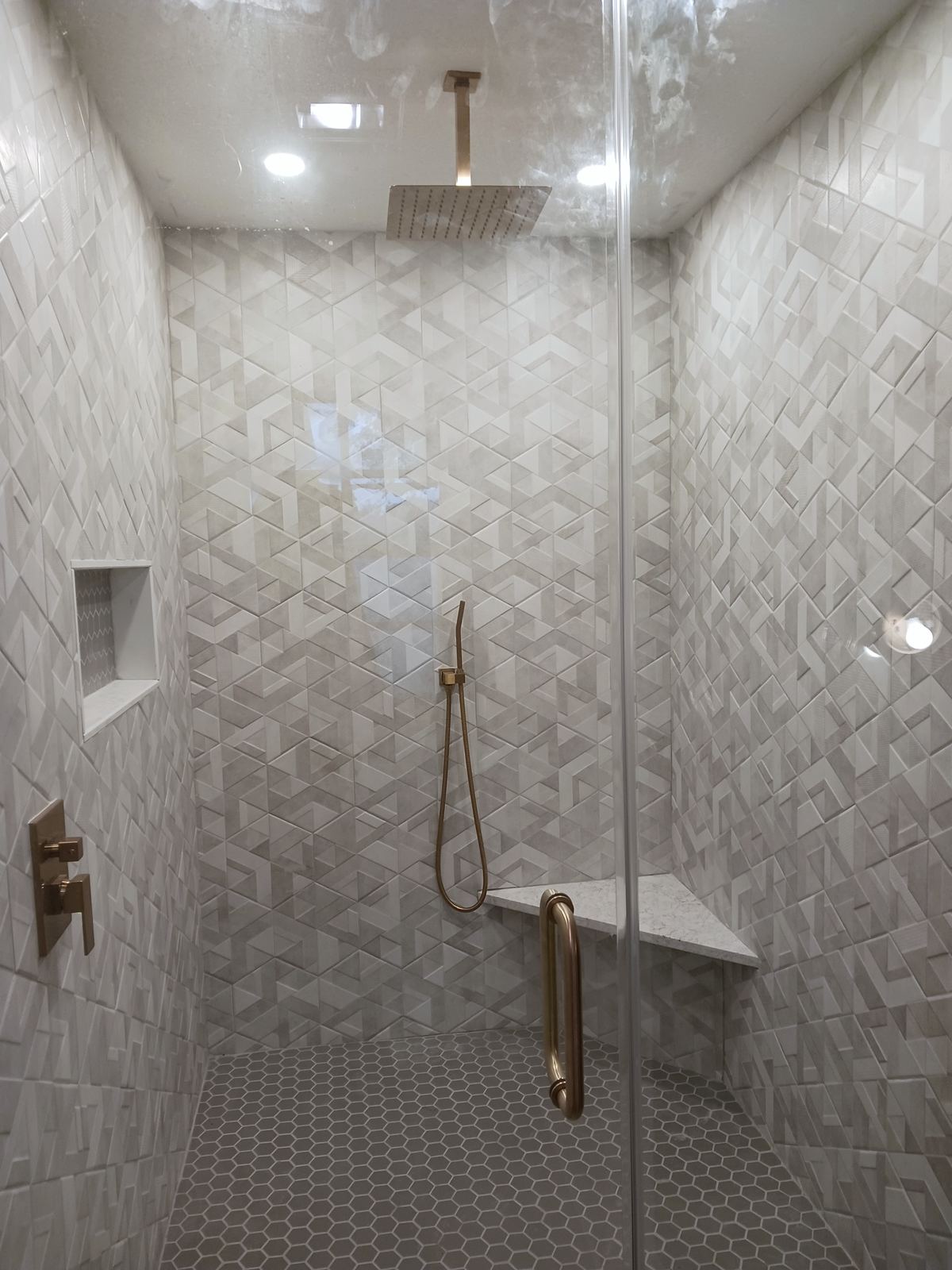
Finished walk-in shower with three-dimensional hexagon wall tile to the ceiling, a niche, a corner bench, a ceiling-mounted rain head and brushed-gold fixtures
03July 2022

Finished

Hexagon tile with a raised pattern from the floor to the ceiling, a niche, a corner bench, a rain head in the ceiling, brushed-gold fixtures and frameless glass.

A niche and a bench are the two places a shower is most likely to leak, because each one is a shelf where water sits. Both get waterproofed the same as the walls, and both are set with a slight tilt so water runs off instead of pooling.

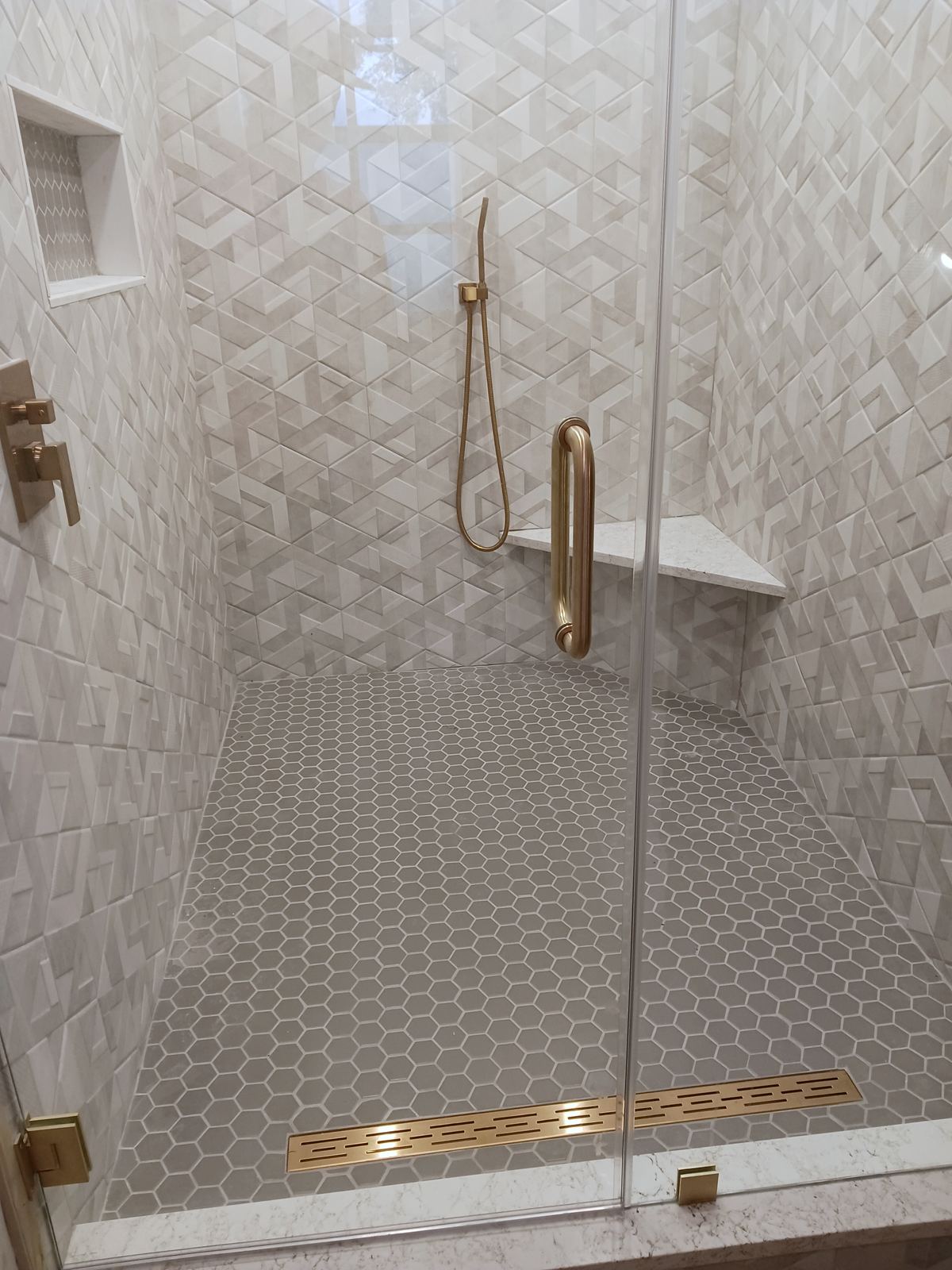
Shower floor in small hexagon mosaic sloping to a brushed-gold linear drain along the glass, with a corner bench behind
04The floor

One slope, one drain

The floor is small hexagon mosaic running to a linear drain along the entrance. A linear drain lets the whole floor slope in a single direction instead of funneling to a point in the middle.

The floor is where a shower holds the most water for the longest time. Whatever is under this tile has to be sloped and watertight on its own, before a single piece of mosaic goes down.

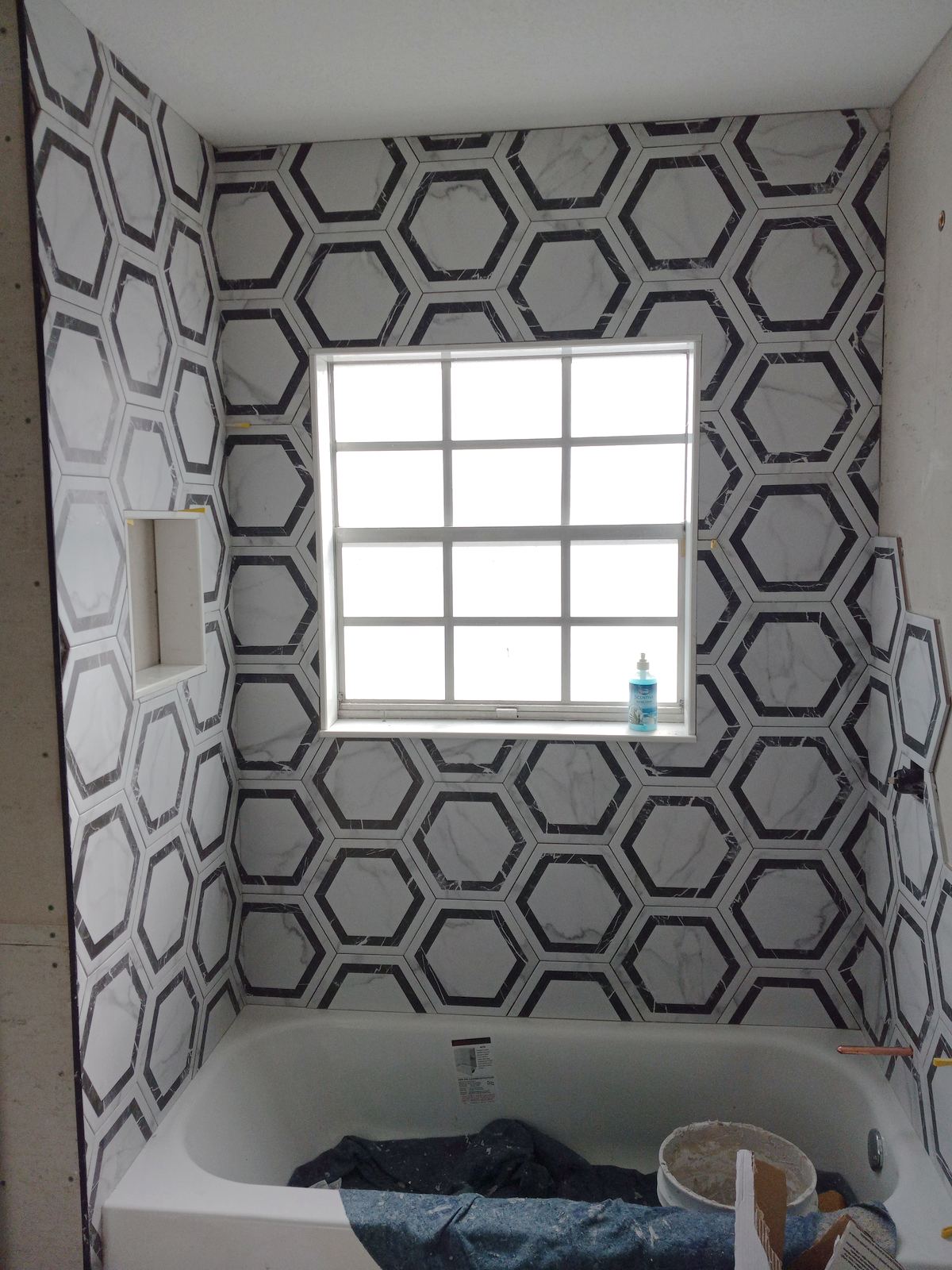
Second bathroom in progress: bathtub with hexagon-pattern wall tile around a window, a niche, and gray backer board still visible at the edge
05Same house

The second bathroom: a tub and a window

The other bathroom in the same house, in progress. At the right edge, where the tile has not reached yet, you can see the gray backer board.

A window inside a tub or shower wall is the hardest detail in the room. Water hits the sill every single day. The sill has to tilt back toward the tub, and the waterproofing has to wrap into the window opening instead of stopping at its edge.

What belongs behind the tile, and what does not

There is more than one good way to build a shower. They all have the same two parts: a board that survives water and a layer that stops it.

Belongs in a shower
  • Cement board or fiber-cement board, with a waterproofing membrane over the face.
  • Foam backer board made for showers, with every seam and screw sealed.
  • A sheet membrane over the board, lapped at the seams.
  • A sloped floor that is watertight before the tile goes on, tied into the walls with no gap at the corner.

The test: you should be able to run the shower on the bare, waterproofed walls and floor, with no tile at all, and nothing behind them gets wet.

Does not belong
  • Ordinary drywall.
  • Green “moisture-resistant” drywall.
  • Cement board with nothing over it and nothing behind it. It survives the water and lets it through.
  • A level niche shelf, bench or window sill. Water has to have somewhere to go.

Why it gets missed: a shower built the wrong way looks exactly the same on day one. The difference shows up later, on the other side of the wall.

Five things to ask before anyone tiles your shower

  1. What board goes on the walls?

    You are listening for cement board, fiber-cement or a foam board made for showers. If the answer is drywall of any color, stop there.

  2. What is the waterproofing, and where does it stop?

    It should cover the floor, the curb, the walls, the niche and the bench as one continuous layer. Most leaks start at a place where the waterproofing ended.

  3. How is the floor sloped, and to what drain?

    Decide between a center drain and a linear drain before the floor is built, not after. It changes the slope, the tile you can use on the floor and how the entrance is finished.

  4. How are the niche, the bench and any window handled?

    These are the details that separate a shower that lasts from one that does not. Each needs a tilt and its own waterproofing.

  5. What happens if the wall behind the old tile is wet?

    Old showers often hide soft board or damaged framing. Ask whether fixing that is written into the job or will turn up later as an extra.

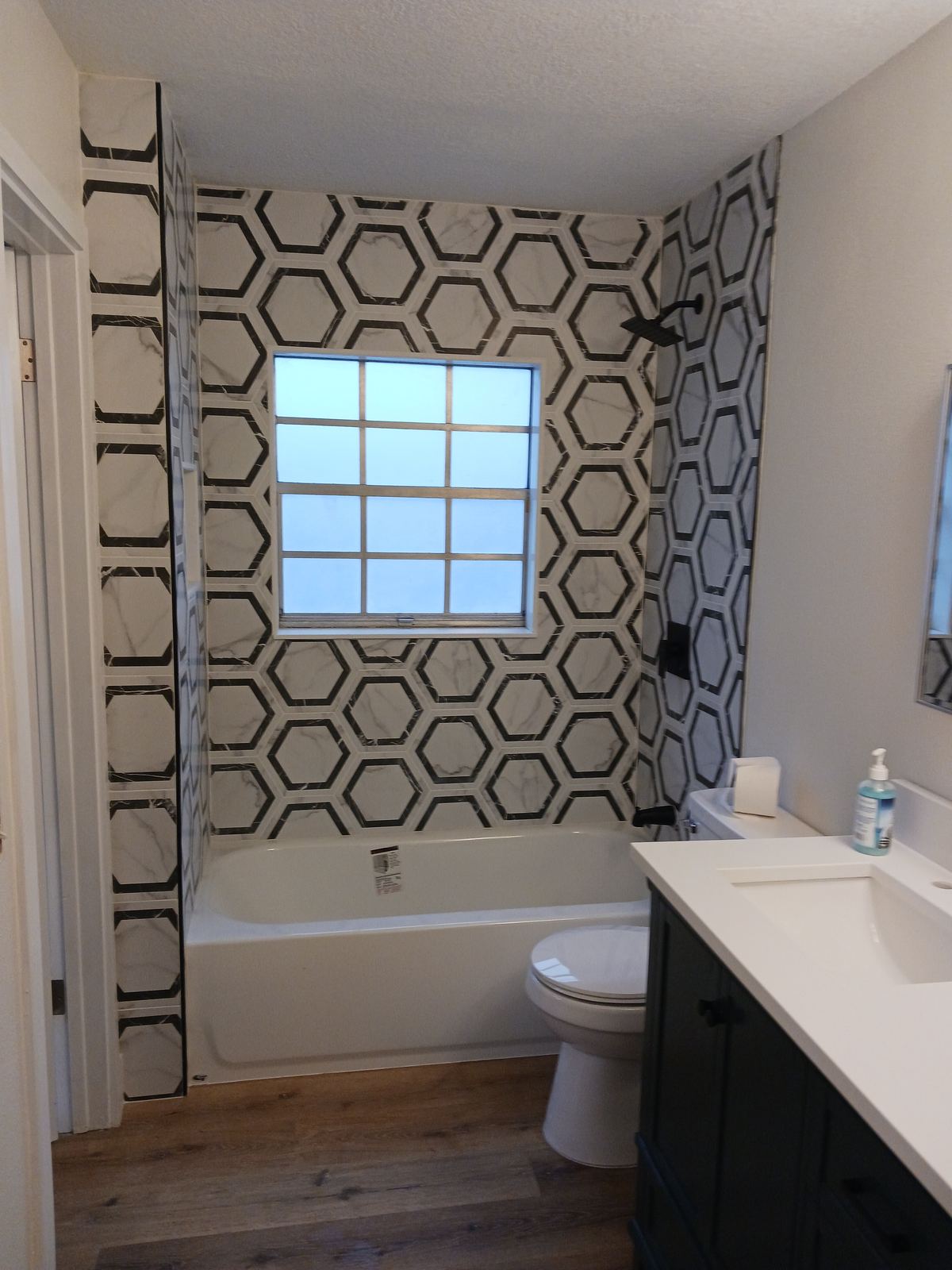
Finished second bathroom with hexagon-pattern tile around the tub and window, dark vanity and white countertop
The second bathroom, finished. Tile to the ceiling around the tub and the window.

Shower tile — what people ask

Can you tile over drywall in a shower?

No. Drywall is gypsum wrapped in paper. Water that gets through the grout soaks into it, the board softens, and the tile lets go. Shower walls need a backer board made for wet areas, with a waterproofing layer over it.

Is cement board waterproof?

No. Cement board is not damaged by water, which is why it is used in showers, but water passes straight through it and through every seam and screw hole. It still needs a waterproofing layer: a membrane rolled or troweled over the face of the board, or a sheet membrane.

Can you use green board in a shower?

No. Green “moisture-resistant” drywall is still gypsum and paper. It holds up to the humidity of a bathroom, on the walls outside the shower. It does not hold up to direct water, and residential building codes no longer accept it as a tile backer inside tubs and showers.

Is grout waterproof?

Standard cement grout is not. It is porous, and it lets a small amount of water through every time the shower runs. Sealer makes grout easier to keep clean. It does not turn tile and grout into a waterproof surface.

How do you know if water is getting behind shower tile?

Tiles that sound hollow or move when you press them. Grout lines that stay dark long after the shower has dried. A musty smell that cleaning does not fix. And on the other side of the wall: bubbling paint, a swollen baseboard or a stain on the ceiling below.

Planning more than a shower?

Bathroom Remodeling in Tampa

Showers, tubs, tile and vanities, with photos of bathrooms we built.

See bathrooms →

Guide No. 1: Your Old Backsplash

What we found behind a stone backsplash, and when a wall can be patched or has to be replaced.

Read the guide →

Kitchen Remodeling

Cabinets, countertops, islands, backsplash and layout changes.

See kitchens →

Not sure what is behind yours?

Text a photo of your shower to (813) 476-0694, or ask for a free in-home estimate. We will tell you what we see.

Get My Free Bathroom Estimate

Let's Build Your Bathroom

Tell us about your bathroom and we'll schedule a free in-home estimate within 48 hours. No pressure — just honest numbers and a crew that shows up on time.

📞
💬
📍

Service Area

Tampa Bay, Brandon, Westchase, Wesley Chapel, Riverview, FL

Get Your Free Bathroom Estimate

⚡ We respond within 2 hours during business hours

Text WhatsApp Free Estimate