Home  /  Kitchen Remodeling  /  Before You Remodel: Old Backsplash
Before You Remodel — Guide No. 1

What's Really Behind Your Old Backsplash

Most backsplashes are glued straight onto painted drywall. When the old one comes off, the face of the wall usually comes off with it. Here is what that looks like in a real kitchen, how to tell a wall that can be patched from one that has to be replaced, and what to settle before anyone picks up a pry bar.

By the LTJ Remodeling crew5 min readPhotos from our own job
Kitchen wall after an old stone backsplash was removed: torn drywall paper and old adhesive between new storm gray cabinets
Behind the old backsplash — a kitchen we rebuilt in 2023

Does removing a backsplash damage the drywall?

Almost always, at least a little. Tile and stone are set in adhesive that grips the paper face of the drywall harder than that paper grips the gypsum behind it. Pull the backsplash and patches of paper come with it.

Small tears can be sealed and skimmed smooth. When the paper is gone across most of the wall, or the board has gone soft from old moisture, that section is cut out and replaced. Neither one is a disaster. It is simply work that somebody has to do, and it belongs in the plan before demolition day — not discovered on it.

What we found, and what we did about it

Same kitchen in every photo, June to August 2023. No stock photos.

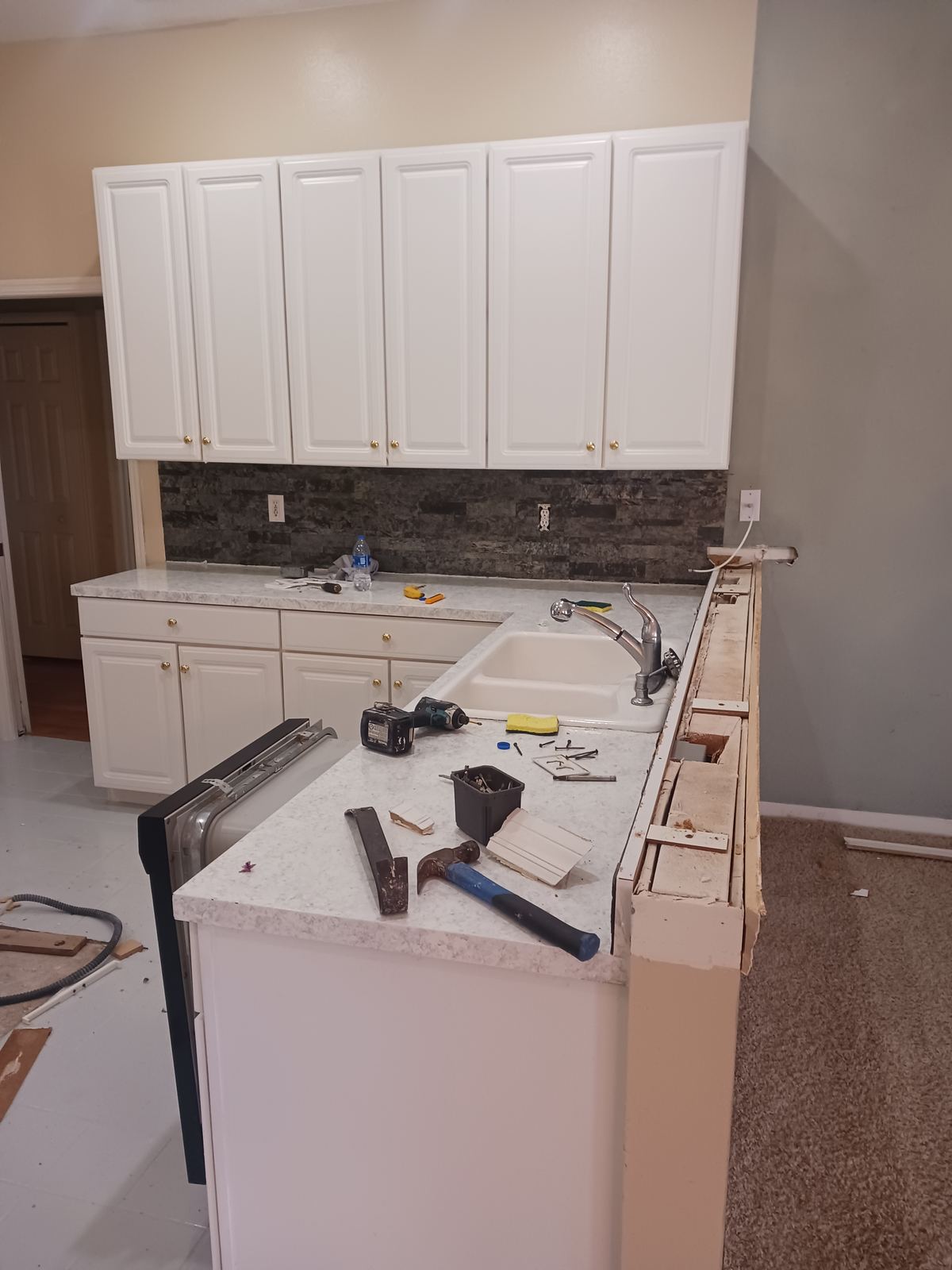
Kitchen before the remodel with white cabinets and a dark stacked-stone backsplash, tools on the counter on demolition day
01June 2023

The kitchen we started with

White cabinets, and a dark stacked-stone backsplash between the counter and the uppers. This photo is from the day demolition started, which is why there are tools on the counter.

From the front, a backsplash like this tells you nothing about the wall behind it. That is the whole problem: nobody knows what they have until it is off.

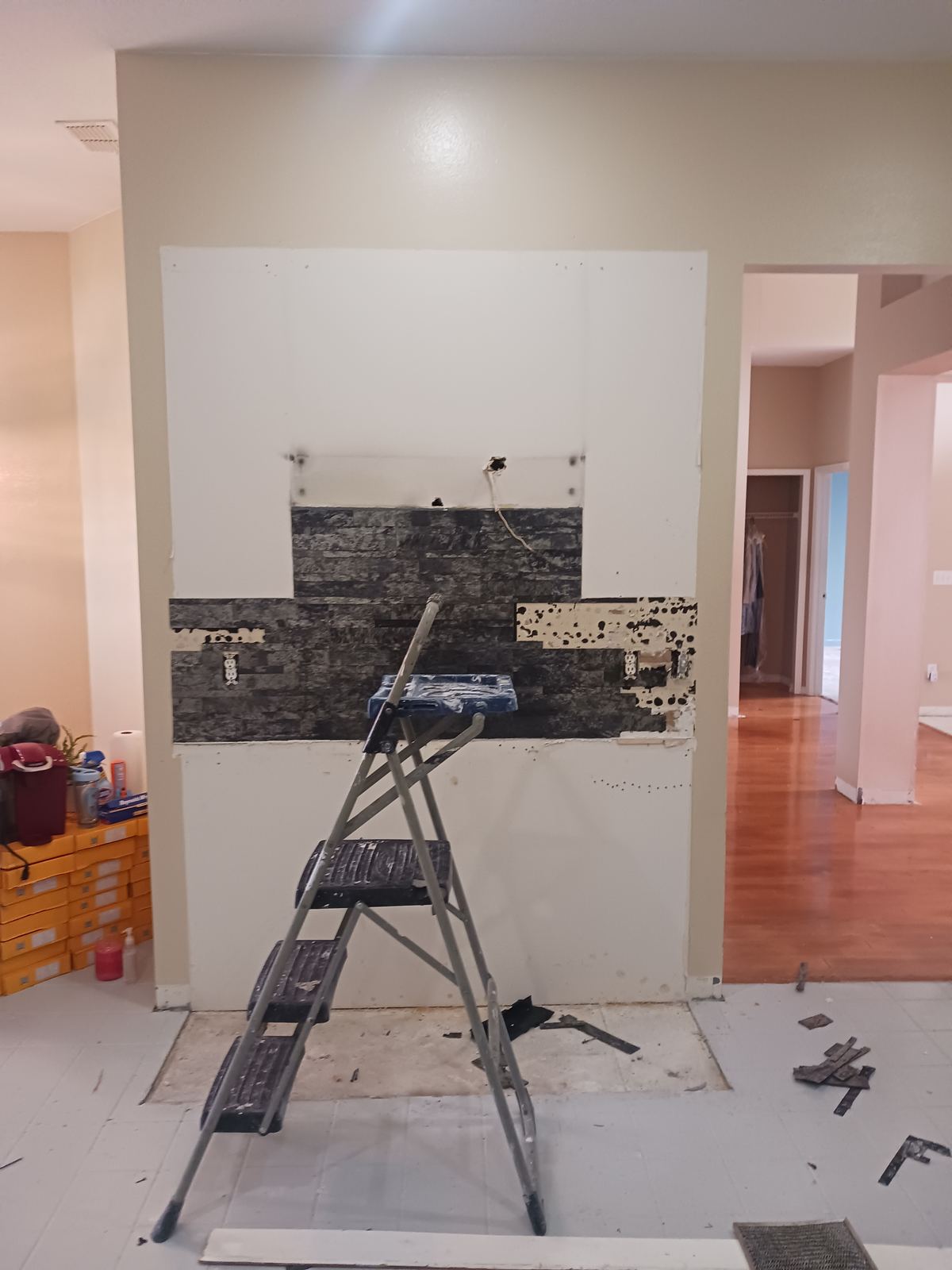
Stacked-stone backsplash partly removed from a kitchen wall during demolition, with a step ladder in front
02Demolition

The stone comes off

Stacked stone is heavy and it is glued on to stay. It does not come off in one clean sheet. It comes off piece by piece, and each piece pulls at the surface of the wall as it lets go.

You can already see it here: bare spots, adhesive, and the outline of everything that used to be on that wall.

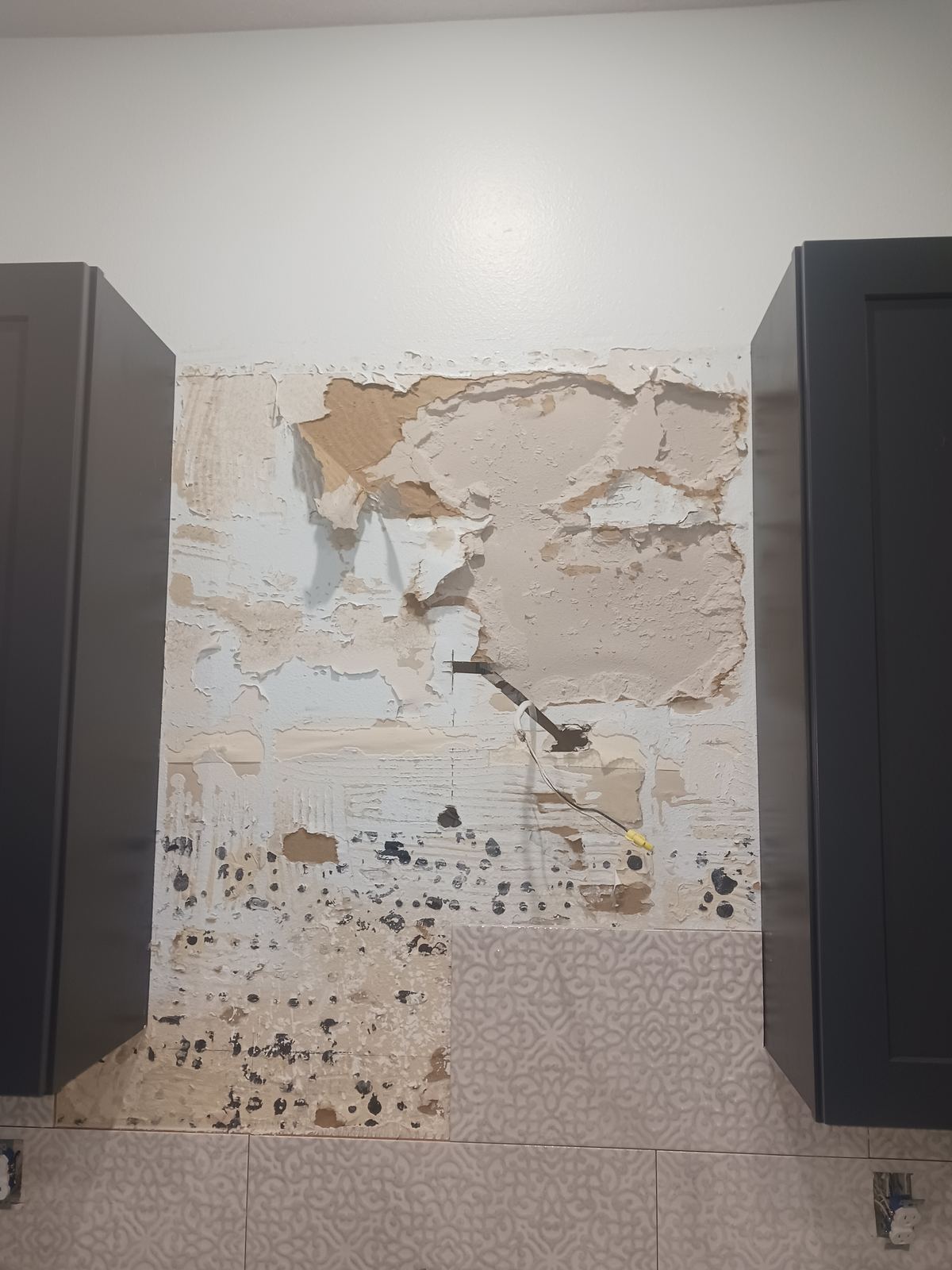
Kitchen wall after backsplash removal showing torn drywall paper, exposed brown gypsum paper and ridges of old adhesive
03What was behind it

Torn paper and old adhesive

This is the same kitchen with the new cabinets going in. The white areas are what is left of the wall’s paper face. The brown areas are where that face tore off completely. The ridges and dark spots are old adhesive.

New stone cannot go on a wall like this. Adhesive does not hold to raw, torn paper the way it holds to a sound surface, and joint compound spread over torn paper tends to bubble unless the paper is sealed first.

On this wall we did not patch. We took the drywall out and put cement board in its place.

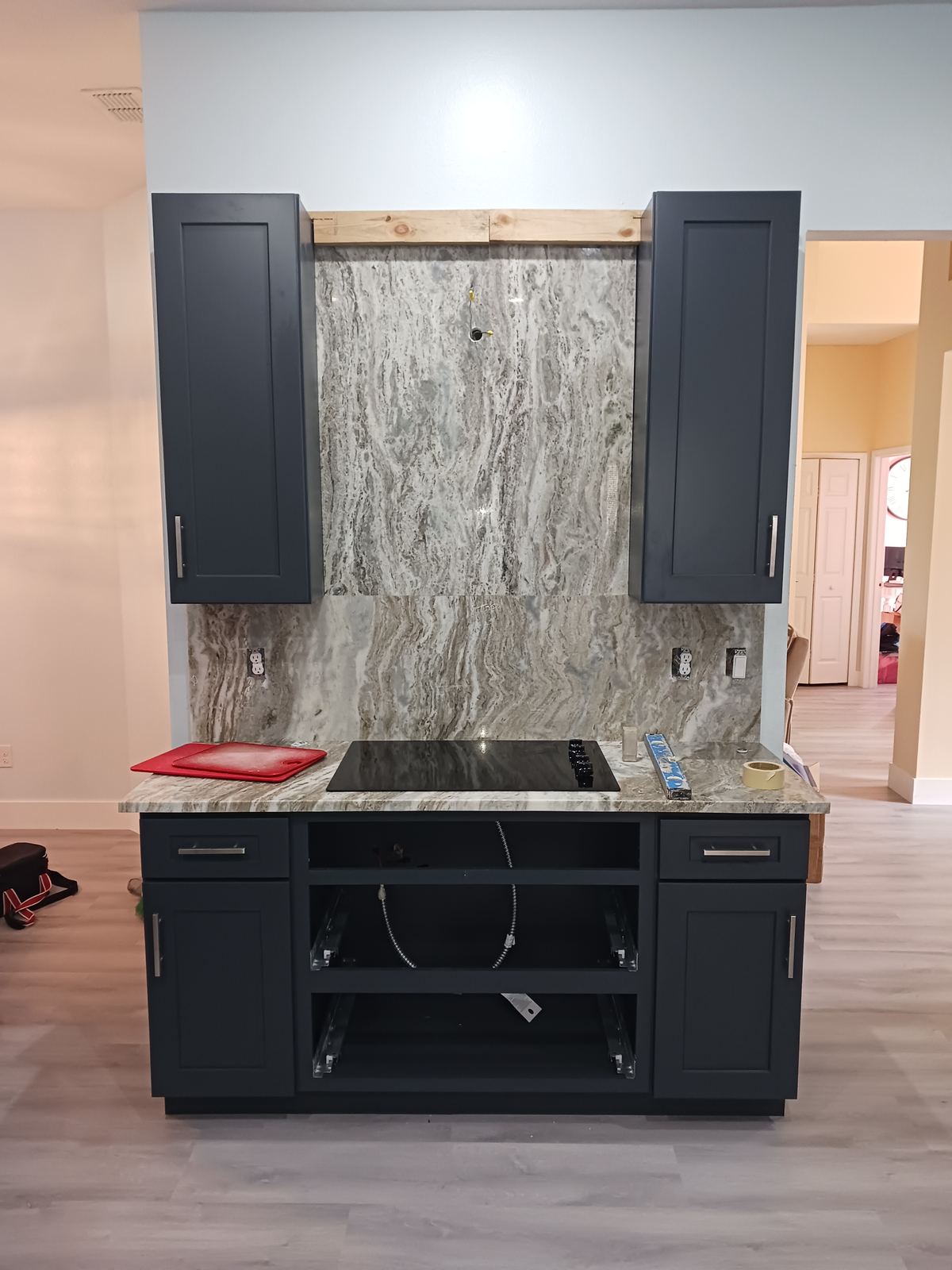
Granite slab backsplash installed full height between storm gray shaker cabinets above a cooktop, braced with wood strips at the top
04The new backsplash

The same granite as the countertop, full height

The new backsplash is not tile. It is the same granite as the countertop, run from the counter up to the cabinets and on up the wall where the range hood will go. No grout lines, nothing to scrub.

Stone like this is heavy, and it shows every dip in the wall behind it. That is why the wall under it matters more than it would under small tile: it has to be flat and it has to be solid.

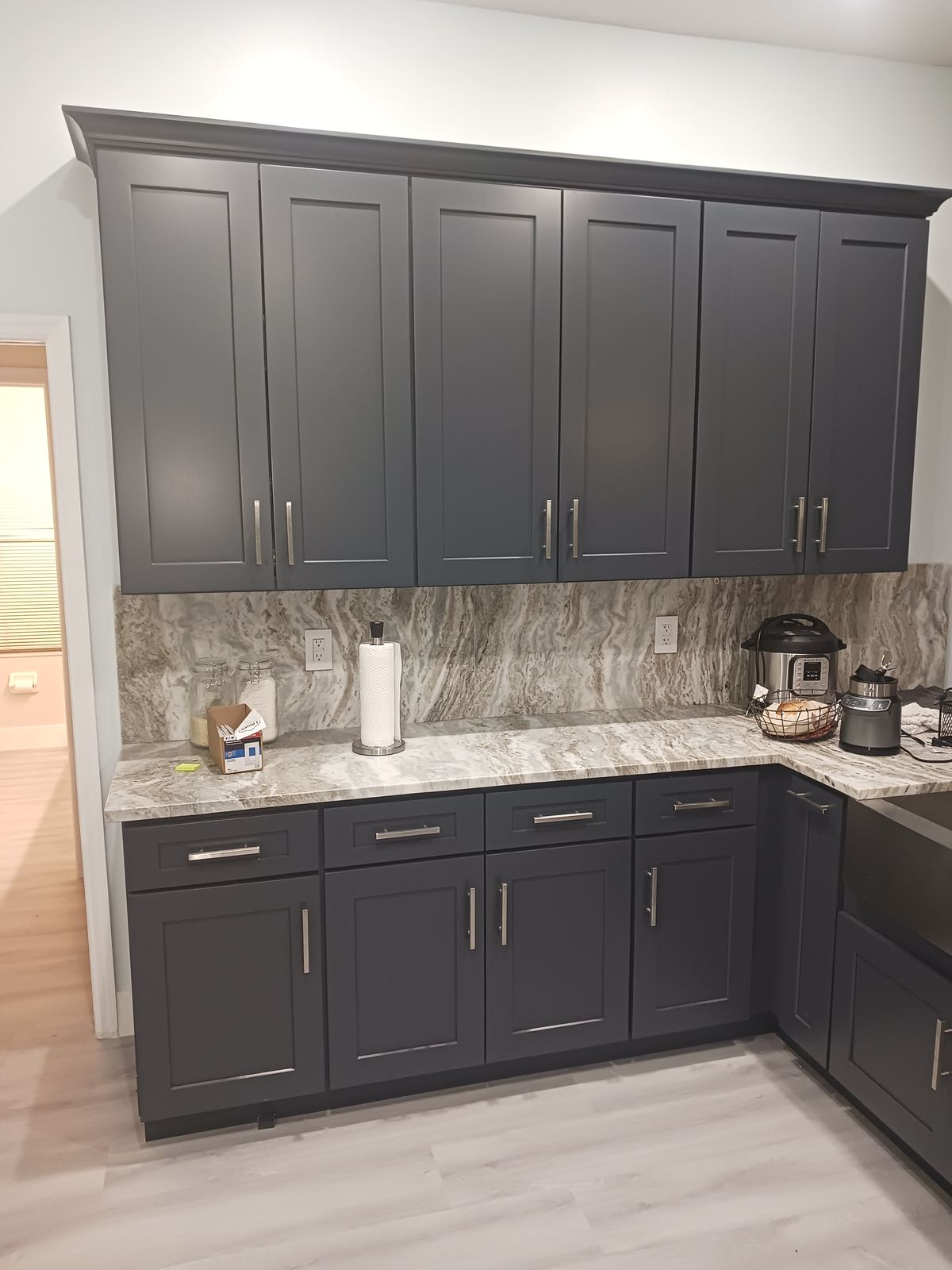
Finished kitchen with storm gray shaker cabinets, granite countertop and matching full-height granite backsplash
05August 2023

Finished

Storm gray shaker cabinets, granite counters, and the same stone carried up the wall. The outlets are cut into the granite, and the veining runs through from the counter into the backsplash.

Nobody who walks into this kitchen will ever see the wall behind the stone. It is still the part that decides whether the stone stays put.

Patch the wall, or replace it?

There was nothing wrong with the original wall in this kitchen. Drywall behind a kitchen backsplash is standard. The damage comes from taking the old backsplash off.

Patch it when
  • The tears are scattered and shallow.
  • The board is still hard and flat when you press on it.
  • There is no staining or soft spot near the sink or the window.
  • The new backsplash is ordinary tile.

How: scrape the adhesive ridges down, seal the torn paper with a primer made for damaged drywall, skim it with joint compound, sand it flat.

Replace it when
  • The paper face is gone across most of the area.
  • The board is soft, crumbly or stained — water has been getting behind the old backsplash.
  • Prying the old tile off left holes, not just tears.
  • The new backsplash is heavy stone that needs a flat, solid wall.

How: cut the damaged section out back to the studs and hang new board. New drywall is fine behind tile in a dry kitchen. Cement board is the step up for spots that see water or carry heavy stone.

Five things to settle before the old one comes off

  1. Ask what happens to the wall.

    Is repairing or replacing the wall written into the job, or will it turn up later as an extra? Whoever is doing the work should be able to answer that before they start.

  2. Pick the backsplash before the countertop is measured.

    A stone backsplash is cut from the same slabs as the countertop. If you decide you want one after the counters are made, matching the stone gets a lot harder.

  3. Count your outlets and switches.

    Every one of them gets cut into the new backsplash, and each electrical box has to be brought forward so the cover plate sits flush on the new surface. Moving or adding one is easy while the wall is open and hard after.

  4. Look hard at the wall around the sink.

    Staining, a soft spot or a musty smell behind the old backsplash means water has been getting in. Find out where from before it gets covered up again.

  5. Keeping your countertop? Say so first.

    The backsplash sits on the counter. Taking it off without chipping the counter edge is slower, careful work, and it changes how the job is planned.

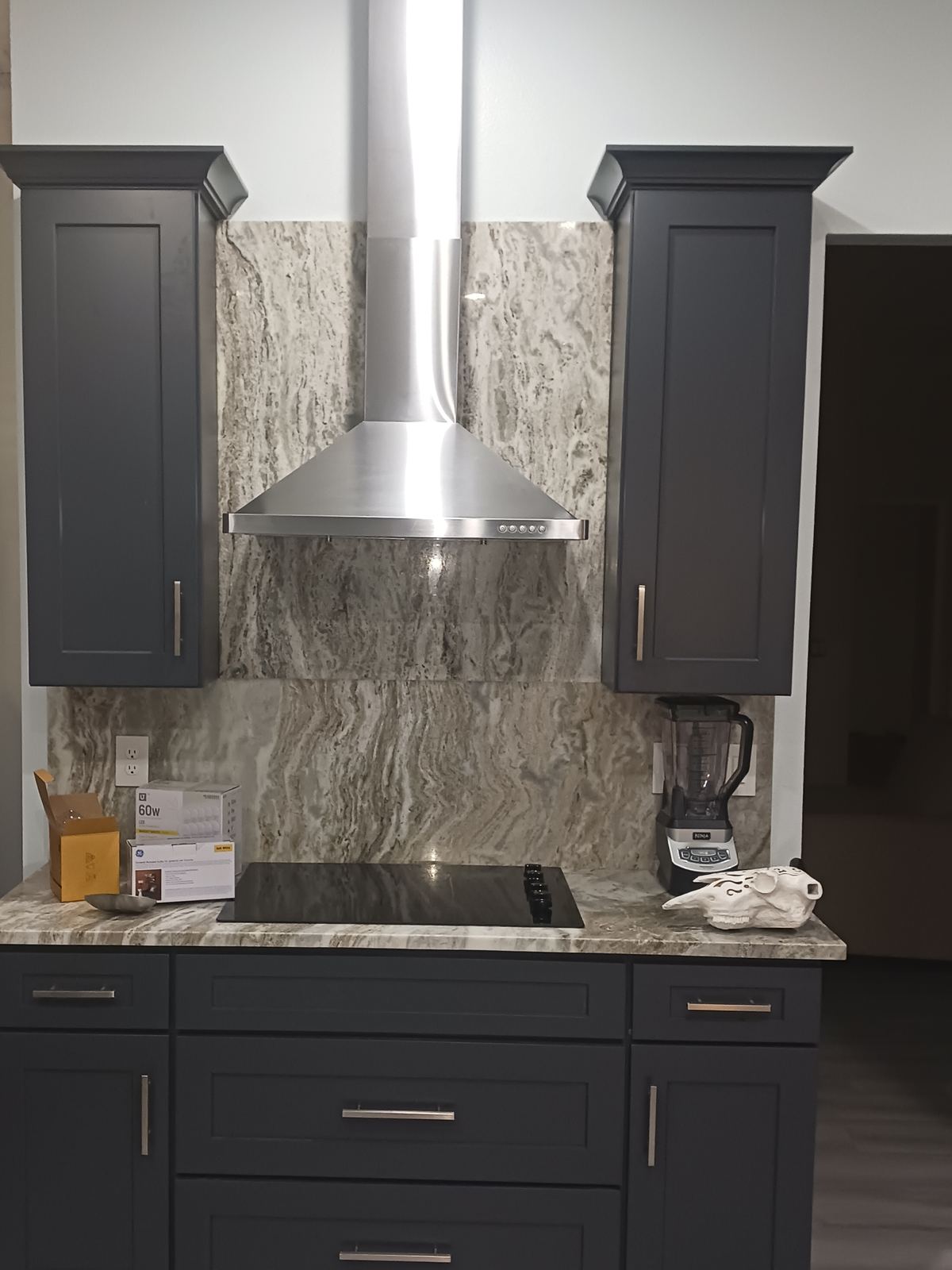
Finished cooktop wall with stainless range hood over a full-height granite backsplash between storm gray shaker cabinets
The cooktop wall, finished. The stone runs behind the hood, between the two cabinets.

Old backsplashes — what people ask

Does removing a backsplash damage the drywall?

Almost always, at least a little. Tile and stone are set in adhesive that grips the paper face of the drywall harder than that paper grips the gypsum behind it, so when the backsplash comes off, patches of paper come off with it. Light damage can be sealed and skimmed smooth. Heavy damage means that section of wall gets replaced.

Can you put a new backsplash over the old one?

Sometimes. The old tile has to be flat, clean and firmly bonded everywhere. Going over it adds thickness, which shows at the outlets, at the open ends of the backsplash and where it meets the window trim. It also covers up whatever is going on behind the old tile. For heavy stone, or old tile that is uneven or loose, take it off.

Can you replace a backsplash without replacing the countertop?

Yes. The countertop gets covered and protected, the old backsplash comes off above it, the wall is repaired, and the new backsplash is set down to the counter with a flexible caulk joint where the two meet. The one thing you cannot do afterwards is cut a matching stone backsplash from a countertop slab that is long gone.

What is a full-height backsplash?

A backsplash that runs from the countertop all the way up to the bottom of the upper cabinets, and usually up the wall behind the range hood, instead of stopping at a short 4-inch strip. It is often cut from the same stone as the countertop, so there are no grout lines to clean.

Do you need cement board behind a kitchen backsplash?

In most kitchens, no. Drywall in good condition is a normal backing for backsplash tile, because a backsplash is not a shower. Cement board earns its place where the wall sees real water, or where the new backsplash is heavy stone that needs a flat, solid surface behind it.
Planning more than a backsplash?

Kitchen Remodeling in Tampa

Cabinets, countertops, islands, backsplash and layout changes, with photos of kitchens we built.

See kitchens →

Bathroom Remodeling

Showers, tubs, tile and vanities. The room where what is behind the tile matters most.

See bathrooms →

Custom Walk-In Closets

Built to your walls: shelving, drawers, hanging zones and lighting.

See closets →

Not sure what is behind yours?

Text a photo of your backsplash to (813) 476-0694, or ask for a free in-home estimate. We will tell you what we would expect to find.

Get My Free Kitchen Estimate

Let's Build Your Kitchen

Tell us about your kitchen and we'll schedule a free in-home estimate within 48 hours. No pressure — just honest numbers and a crew that shows up on time.

📞
💬
📍

Service Area

Tampa Bay, Brandon, Westchase, Wesley Chapel, Riverview, FL

Get Your Free Kitchen Estimate

⚡ We respond within 2 hours during business hours

Text WhatsApp Free Estimate